What 24,000+ Catholics said
Survey reveals strong Catholic identity, room to grow as missionary disciples
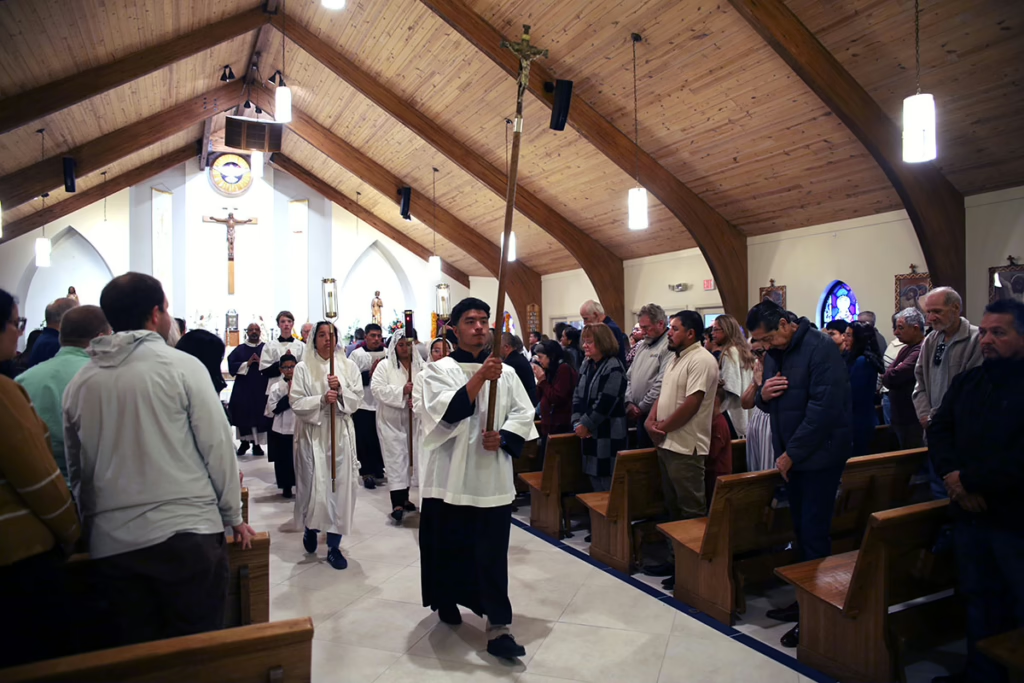
That’s one of the key findings from the Disciple Maker Index (DMI) survey, an anonymous survey conducted earlier this year by the Catholic Leadership Institute (CLI), a nonprofit apostolate that provides leadership training and pastoral support to U.S. Catholic dioceses and parishes.
More than 24,300 people across the diocese participated in the DMI, offering insights into their personal beliefs and spiritual practices, their experience of parish life and Sunday Mass, and how prepared they feel to evangelize.
While every Catholic adult in the diocese was invited to participate, the survey results largely reflect the views of those already active in their parishes: 98% of respondents identified as Catholic, 93% said they attend Mass weekly or more, and more than half (51%) said they have been part of their parish for 11 years or longer.
The survey was conducted at no cost to the diocese as part of an effort to help Bishop Michael Martin, OFM Conv., develop a long-term strategic plan for the local Church.
CLI tabulated the DMI results for the diocese as a whole, as well as individualized data for each of the 78 parishes and missions that took part.
Pastors have already received their DMI reports and are being encouraged to share the information with parishioners.
Over the next several editions, the Catholic News Herald will explore the diocese-wide DMI survey results, highlighting the primary factors – or “key drivers” – that CLI has found help strengthen people’s faith, build effective parishes and inspire missionary discipleship. Among the questions examined: Do people feel welcome at their parish? Are Masses and homilies spiritually uplifting? Do parishes help people grow in faith and equip them to evangelize? And would parishioners recommend their parish to others?
From the answers, CLI identified six “strengths” and six “opportunities” for the diocese:
STRENGTHS
- 93% said they agree that the Eucharist is truly the Body and Blood of Christ.
- 94% said they agree that Scripture is the divinely inspired word of God.
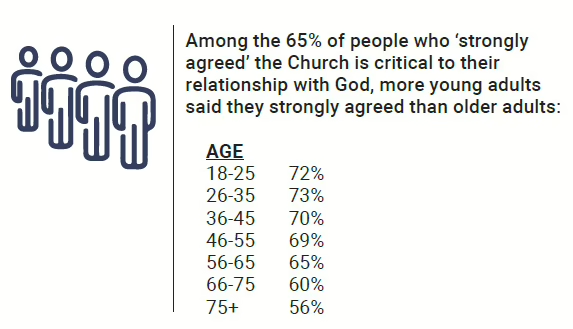
- 65% said they strongly agree that the Church is critical to their relationship with God.
- 93% said they attend Mass weekly or more.
- 88% said they pray at least weekly.
- 46% said they pray with someone outside of Mass at least weekly.
OPPORTUNITIES
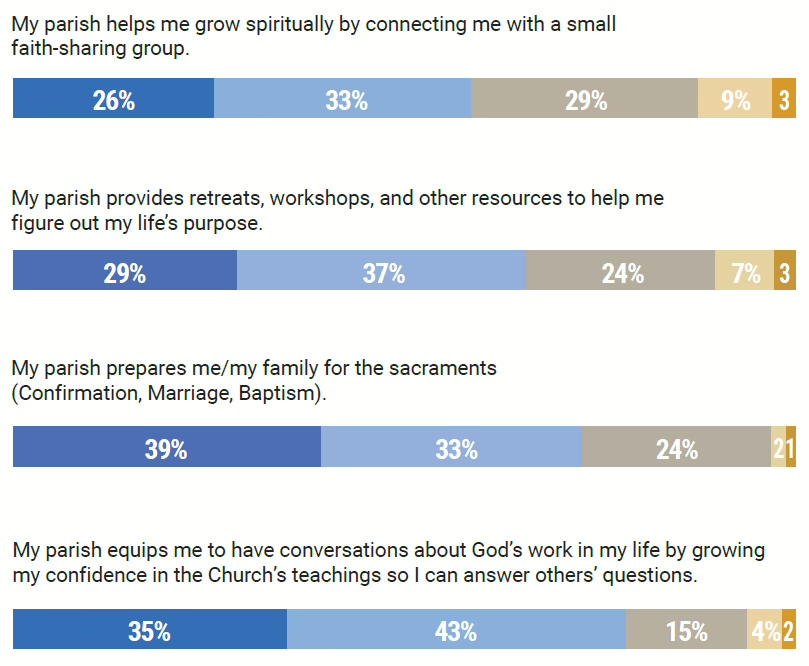
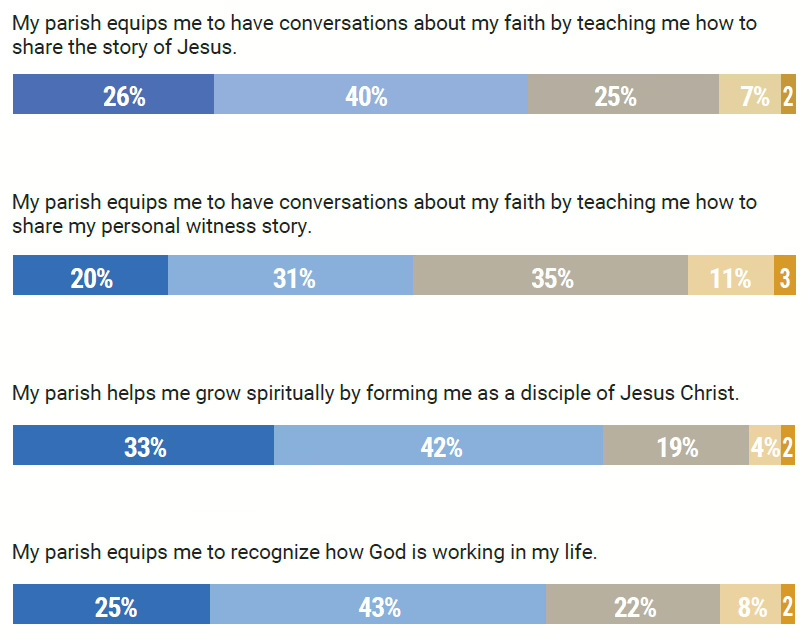
- Only 33% strongly agreed that their parish helps form them as a disciple of Jesus.
- Only 25% strongly agreed that their parish equips them to have conversations about their faith by growing their confidence in the Church’s teachings so they can answer people’s questions.
- 62% have never attended a retreat.
- 78% have not invited a young man to consider a priestly vocation in the past year.
- 72% have not invited anyone to consider a religious vocation (nun or brother) in the past year.
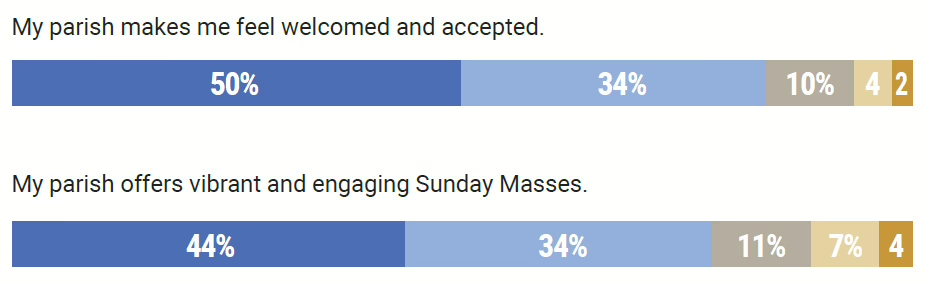
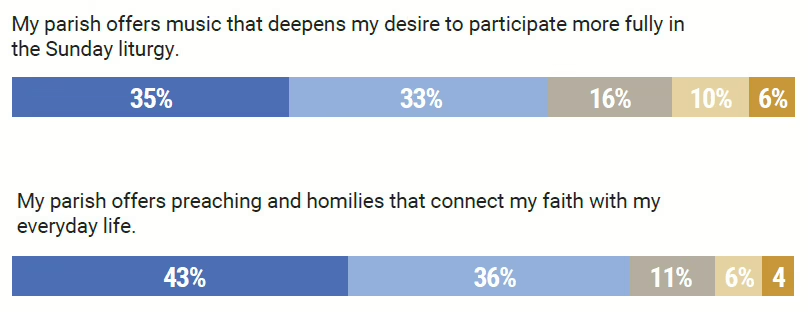
- Of the Sunday Mass experience, only 35% strongly agreed that their parish offers music that deepens their desire to participate more fully in the liturgy.
The Disciple Maker Index survey used a five-point scale instead of open-ended questions to provide a standardized “snapshot” of a parish, said Tricia Cellucci, a consultant with CLI who oversaw the diocese’s DMI survey.
This format will help the diocese and parishes compare and contextualize results, identifying strengths and opportunities for growth, Cellucci said.
“The data are not intended to provide all the answers,” she said. “Rather, the data are intended to start conversations at a parish level as to why parishioners responded in such a way and what it means.”
In addition to parishes sharing their survey results with parishioners, Bishop Martin is also reviewing the data in the broader context of independent research and other feedback CLI collected earlier this year from priests, diocesan employees and other key stakeholders.
Drawing on all these insights, he plans to present a strategic pastoral vision that will guide the diocese’s growth and better equip the faithful to proclaim and live the Gospel.
— Patricia L. Guilfoyle
Demographic data about parishioners who took the Diocese of Charlotte DMI survey:
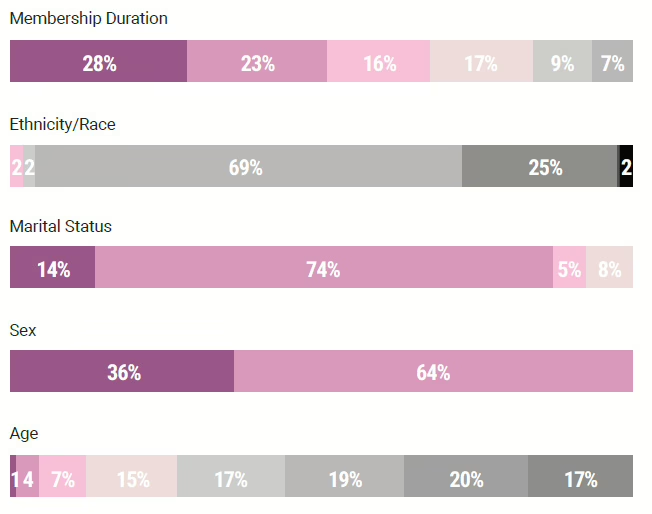
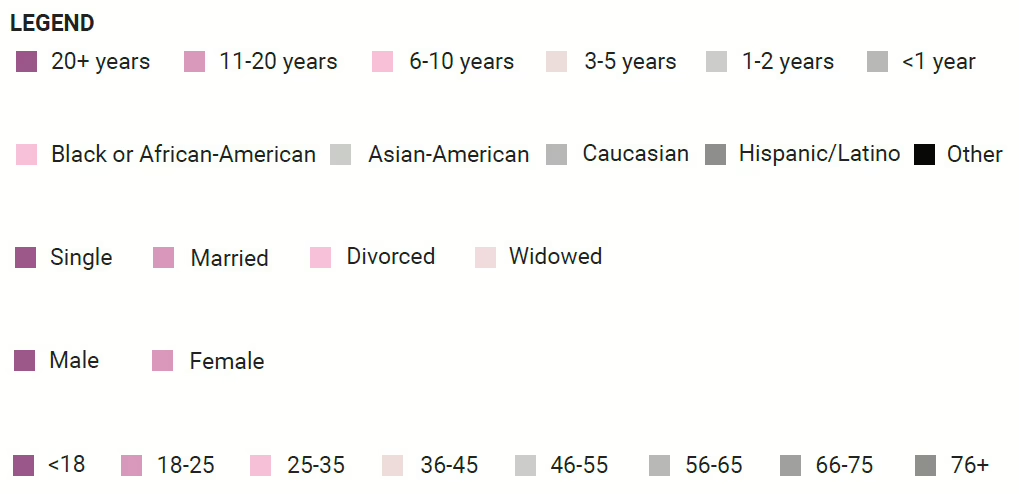
Note: The Disciple Maker Index survey, conducted in March-April 2025 at the diocese’s 93 parishes, drew responses from 24,332 people at 78 parishes and missions in the Diocese of Charlotte. While not a random or representative sample of all Catholics in the diocese, the results largely captured the views of active Catholics who regularly attend Mass and chose to participate in the 75-question survey. Data were tabulated by the Catholic Leadership Institute, which conducted the DMI at no cost as part of a future strategic plan for the diocese.
Catholics who took the DMI survey report strong personal beliefs
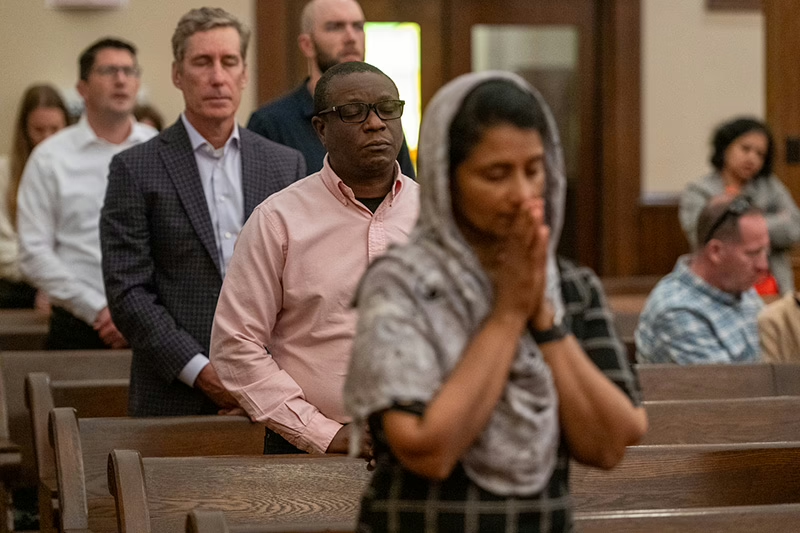
That’s among the findings from the Disciple Maker Index (DMI) survey, conducted earlier this year at 78 of the diocese’s 93 parishes and missions. More than 24,300 people participated in the anonymous survey, most of whom identified as frequent Mass-goers. While the DMI results are not a random or representative sample of the diocese’s Catholic population, they do provide a snapshot of the faith among its most active parishioners.
Overall, the diocese’s DMI results reflect a high level of belief and adherence to core Church teachings among respondents.
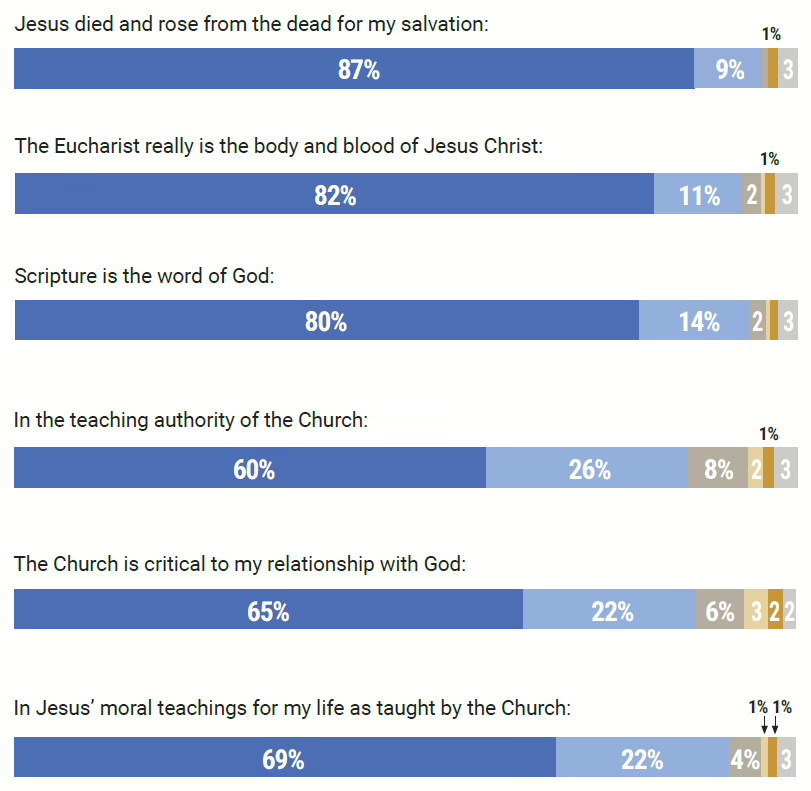
In the survey, 93% of respondents agreed that the Eucharist is the body and blood of Jesus Christ – a fundamental tenet of the Catholic faith.
Likewise, nearly all respondents – 96% – agreed that Jesus died and rose from the dead for our salvation, 94% agreed that Scripture is the divinely inspired word of God, and 91% said they agreed with Jesus’ moral teachings for their life as taught by the Church.
Furthermore, 86% of respondents said they agreed in the teaching authority of the Catholic Church, and 87% also agreed that the Church is critical to their relationship with God.
Yet how strongly people agreed with core Catholic beliefs, such as the Real Presence of Jesus in the Eucharist or the authority of the Church, varied by race and age.
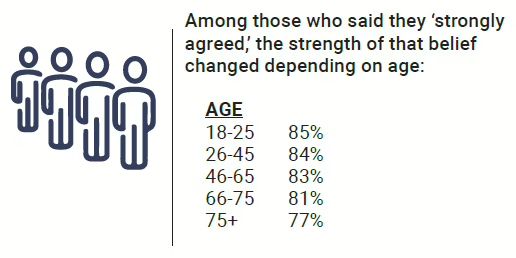
Regarding the Eucharist, 87% of Hispanic respondents and 85% of Asian-American respondents said they strongly agreed with belief in the Real Presence – higher than the diocesan average of 82% who said they strongly agreed. Among white respondents that percentage was 80%, and for black respondents, 79%.
Younger respondents were more likely to say they strongly agreed in the Real Presence than older respondents. (See chart below.)
Hispanic and Asian-American respondents were also more likely to say they strongly agreed in the teaching authority of the Church – 69% and 67%, respectively, above the diocesan average of 60% who strongly agreed – versus 58% for white respondents and 54% for black respondents.
Younger people were more likely than older people to say they personally believed in the teaching authority of the Church and that the Church is critical to their relationship with God. Among respondents aged 26-35, for example, 71% said they strongly agreed in the Church’s teaching authority and 73% said the Church is critical to their relationship with God. Among respondents aged 66-75, however, those percentages were 54% and 60%, respectively.
The high numbers of people who said they strongly agreed about the Eucharist, Scripture and the Church’s authority were among the top “strengths” identified in the diocese’s overall DMI results by the survey’s organizer, the Catholic Leadership Institute.
“One way to look at the data is to see what the strongest positive and negative results were – that is, those who said they strongly agreed on a particular question versus those who are neutral to disagreeing,” explained Tricia Cellucci, a CLI consultant who oversaw the diocese’s DMI survey. “People who strongly agreed will be among your most committed and enthusiastic parishioners, so having a high number of people who strongly agree on the question indicates a key strength. And conversely, when a person responds neutrally or disagrees, strongly or not, with a statement, we see that as an area of growth.”
— Patricia L. Guilfoyle
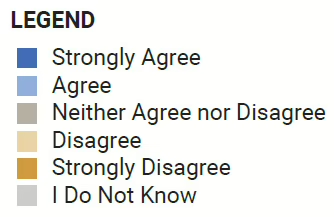
Diocesan-wide responses on questions related to how strongly people believe in core teachings of the Catholic faith:
Spiritual practices give people ways to grow closer to Christ
A survey of regular Mass-goers in the Diocese of Charlotte shows – perhaps not surprisingly – that they participate often in parish activities and say they are growing in their faith.
That’s among the findings from the Disciple Maker Index (DMI) survey, conducted earlier this year at 78 of the diocese’s 93 parishes and missions. More than 24,300 people participated in the anonymous survey, providing a snapshot of the faith in western North Carolina.
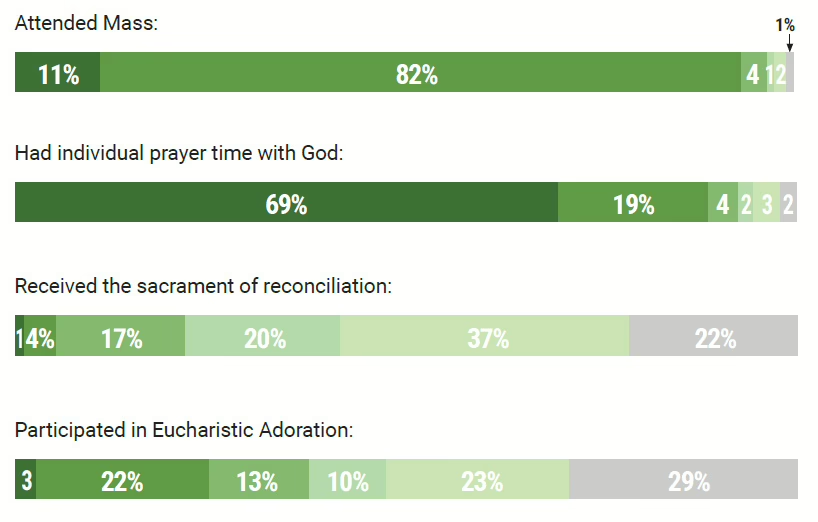
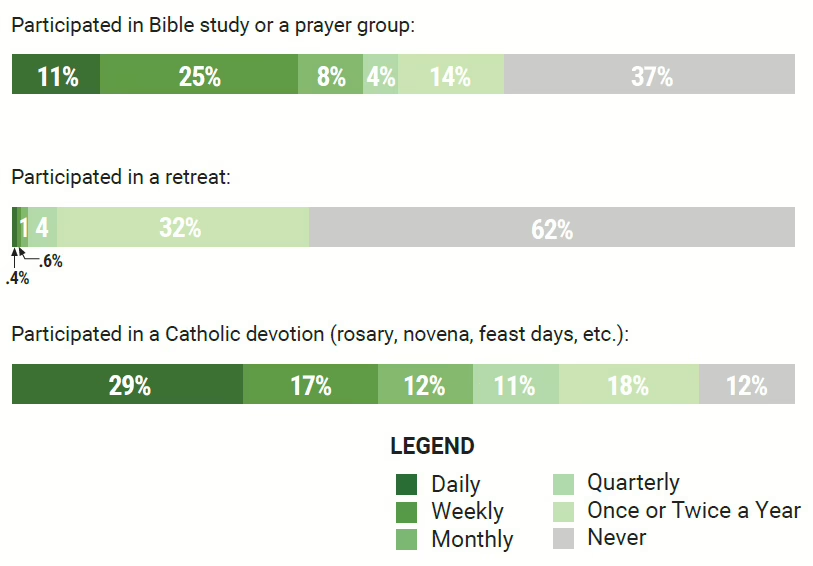
Overall, the diocese’s DMI results reflect a high degree of spiritual practices among respondents. Most notably, 93% attend Mass at least weekly and 69% pray every day – two measures the Catholic Leadership Institute, the survey’s organizer, identified as among the diocese’s top “strengths.”
Furthermore, 46% of respondents said they participate in a Catholic devotion (such as praying the rosary) at least weekly, 36% said they attend a Bible study at least weekly, and 25% go to Eucharistic Adoration at least weekly.
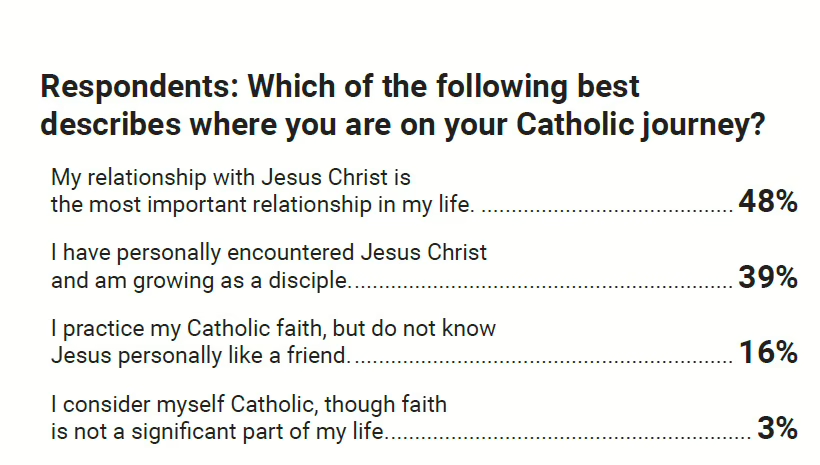
Nearly half of respondents (48%) said their relationship with Jesus Christ is “the most important relationship in my life.”
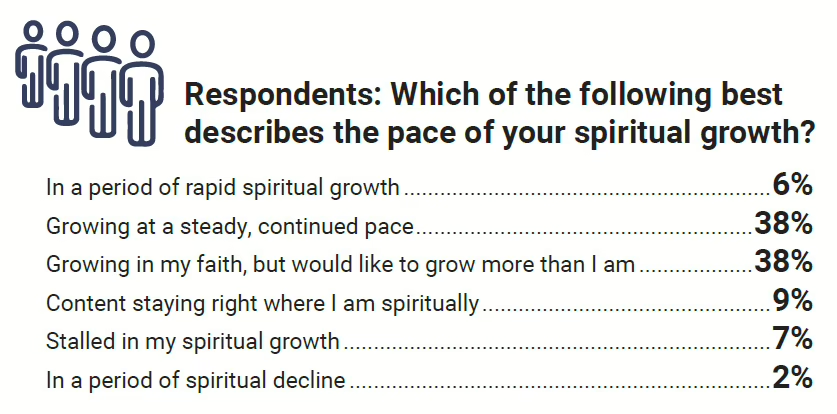
And when asked to describe their pace of spiritual growth, 6% said they were “in a period of rapid spiritual growth,” and 38% said they were “growing at a steady, continued pace.” Another 38% said they were growing in faith but “would like to grow more than I am.”
Yet the DMI also revealed a need for improvement: 62% said they have not gone to a retreat in the past year, and 45% haven’t attended a class or workshop about the Catholic faith.
For leaders at St. Peter Parish in Charlotte, that struck a chord. The Jesuit-run parish offers a wide array of workshops and retreats for its 2,500 registered families – from Scripture studies and book clubs to the Spiritual Exercises of St. Ignatius and the Examen Prayer, as well having as a team of 18 spiritual directors who provide one-on-one guidance.
Yet 67% of St. Peter respondents said they’ve never attended a retreat, and 49% no class or workshop – not far off the diocesan averages (62% and 45%). DMI team members are seizing on that as an opportunity for the parish to help people grow spiritually.
Allain Andry, a member of St. Peter’s DMI team and a spiritual director at the parish, said they are looking at ways to “move the needle,” especially among young adults and families with young children. That may mean scheduling more programs online or on nights and week-ends to accommodate people’s work schedules, organizing “bite-sized” one-day retreats, or hosting more events with supper included or at a nearby brewpub, Andry said.
“We’re looking at how do we help more people participate beyond the Sunday Mass – how do we help them engage more, connect more with one another, and integrate with the parish?” he said.
The goal, Andry said, is to provide impactful programming that inspires people to live the Jesuit charism. “Our approach to ministry – at any level – is to be approachable, and to make the Gospel relevant, relatable and understandable.”
— Patricia L. Guilfoyle
Diocesan-wide responses on questions related to the faith practices of respondents, including the following:
Welcoming parishes with engaging Masses nurture people’s faith experience
Hot coffee and sandwiches made with homemade sourdough. A warm handshake. A kind word. A sympathetic ear.
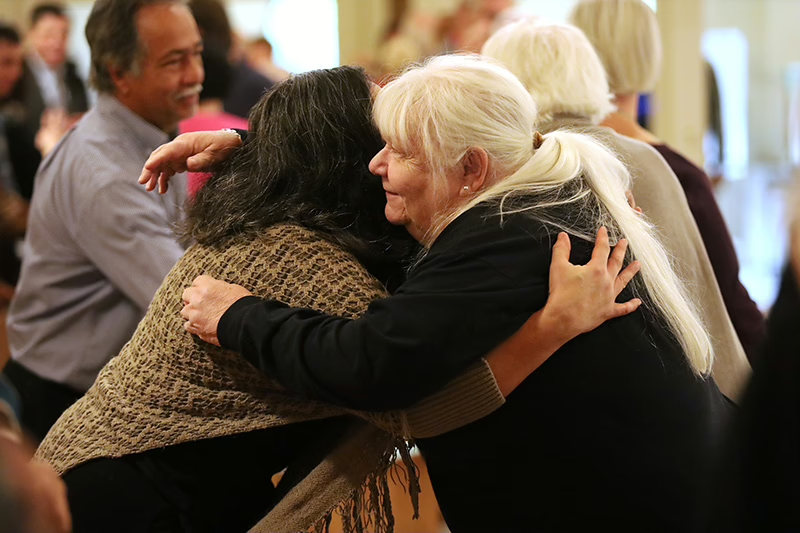
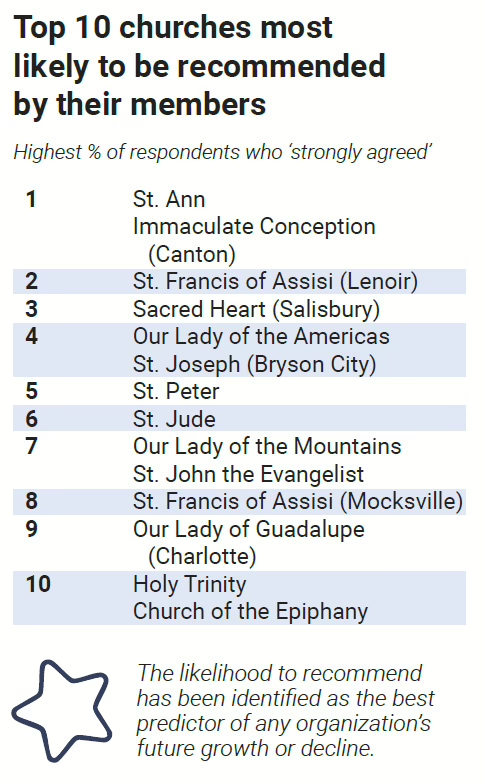
That’s the recipe for success at St. Francis of Assisi Parish in Lenoir, which was identified as one of the top 10 most welcoming parishes in the Disciple Maker Index (DMI), an anonymous survey of nearly 24,000 regular Mass-goers in the Diocese of Charlotte earlier this year.
Everyone at the church – from the ushers at the door before Mass to the staff answering the phone – is committed to making people feel accepted.
“It’s important to welcome the stranger,” says Angela Smith, who with her husband Steve runs the parish’s hospitality ministry and cooks up hearty fare including her famous sourdough bread. “You may be entertaining angels and not even know it. Just being kind to people shows your love of Christ – it flows out of you.”
Nearly every Sunday after the 10 a.m. Mass, volunteers brew coffee and bring in salads, soups, sandwiches or donuts for folks to enjoy. Everyone gathers in the parish hall to eat, chat, laugh and connect.
It’s a familiar scene repeated at many churches around the diocese, and it’s an essential part of building community and discipleship.
“A few minutes talking and spending time together goes a very, very long way,” says Tony Novak, who puts his decades of people skills as a salesman to work as St. Francis’ head usher. “People like people who like them. It’s a fact.”
Yet there is work to do. The diocese’s DMI survey found that some do not feel welcome at their church.
Only 50% of DMI respondents said they strongly agreed that their church makes them “feel welcomed and accepted.” That number was lower for older people (56 and over), divorced or widowed Catholics, and people without kids.
The feeling of belonging is a combination of factors bundled together in what the Catholic Leadership Institute calls the “Sunday Experience” – the 90 or so minutes each week parishioners spend at church, from the parking lot to the pew.
“The Sunday Experience makes or breaks parishioners’ experiences with the Church,” notes CLI’s Tricia Cellucci, who oversaw the diocese’s DMI survey.
Accessible parking, ushers at the door to greet people and answer questions, a reverent worship space, vibrant and engaging Masses, uplifting music, time after Mass to meet other people, parish information that’s easy to find – these are just some of the factors necessary to create an inviting parish.
Parishioners who feel welcome are twice as likely to recommend their parish to a friend, CLI has found.
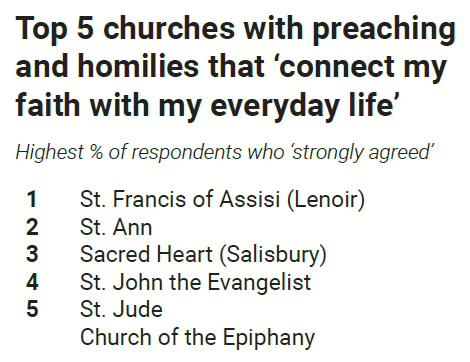
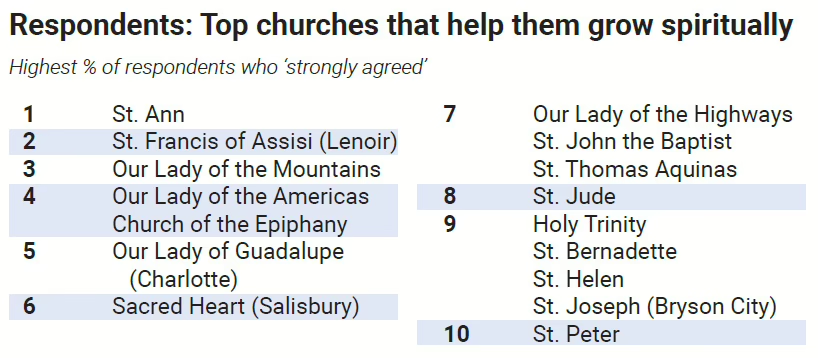
So which parishes have created an exemplary Sunday experience, according to DMI respondents? Thirty-five of the diocese’s churches scored above the diocese’s average, chief among them: St. Francis of Assisi, St. Joseph in Bryson City and St. Ann in Charlotte.
A PASTOR WHO ENLISTS PEOPLE
Someone who says they feel positively about their pastor is nine times more likely to recommend their parish, CLI has found. A key to feeling welcome is being listened to and invited to get involved in the life of the parish.
Members of St. Joseph Parish in Bryson City find that to be true. They are especially proud of their church and their pastor, Father Victor Ameh.
“He really reaches out to people, his energy is very positive,” said Dan Von Behren, a committed parishioner and its finance manager.
Overlooking the Tuckasegee River that ripples through downtown Bryson City, the picturesque granite church attracts many tourists. Yet with only 50 or so regular families, people realize they all must pitch in.
Father Ameh says it’s important to involve everyone. “This is the people’s church, not the clergy’s church. It’s my goal to get people to know that this is their church.”
Since Father Ameh came to St. Joseph last year, the parish has restarted faith formation classes for children and adults (“We have six catechists and about 30 kids learning about the faith,” Von Behren says proudly), trained lectors and formed a choir. The new men’s group has 20 members, who just built Father Ameh an office in the parish hall basement – with the pastor lending a hand alongside them, of course.
“It’s a family, where everybody understands that they have a role to play – not just come to church, sit in the pew, and then go home,” Father Ameh says.
A TRANSCENDENT MASS
St. Ann Church in Charlotte is well known for its beautiful interior, especially its soaring apse mural depicting a scene from heaven with the Lamb of God, saints and angels that was inspired by the famous Ghent Altarpiece. But it’s not art for art’s sake – the art is meant to evoke the sacred, especially at Mass.
“The church is a symbol of heaven, so that when you come to Mass you should have a heavenly experience,” says Father Timothy Reid, pastor since 2007. His Masses regularly include organ music, Gregorian chant and incense – “things that hearken back to an older age in the Church.”
The beauty and reverence of St. Ann’s Masses captivate people, he says. “I think people in the world today are seeking a transcendent experience, something where they feel close to God.”
That’s especially true, he says, of young people at St. Ann, where the average age of a parishioner is 28.
Katie Sholtis, 30, is one of them.
“We live in a world where truth is relative, anything goes, and standards are plummeting. Many people, especially younger generations, are exhausted of what lies the enemy tells us and tired of what the world has to offer,” Sholtis says. “We want something different, something pure and unchanging, that is God Himself, and when you walk into St. Ann, this is what is offered. It is attractive because it is so different from the outside.”
HOMILIES THAT ILLUMINATE
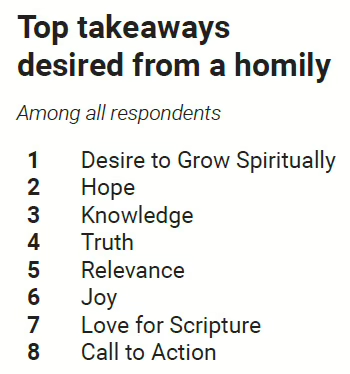
Homilies should connect faith with daily life, and clergy who preach well inspire people to greater discipleship, CLI advises. Parishioners who appreciate their priest’s homilies are 1.7 times more likely to recommend their parish to a friend, its research has found.
At St. Francis of Assisi Parish, 81% of respondents – the most of any church in the diocese’s DMI survey – strongly agreed that their church offers great homilies by Father Alfonso Gamez Jr. and Deacon Stephen Pickett.
Father Gamez credits the Holy Spirit.
“Throughout the week I am thinking about the readings and taking notice of my interactions with people and conversations I have, and if there’s a particular overarching theme, I feel like that’s the Holy Spirit trying to tell me that’s what I should preach on,” he says.
“The purpose of my homily is to illuminate the mysteries of the faith through experience,” he explains. “It’s a practical approach and it’s very accessible, because people know what they experience. If you don’t have that touch – that incarnational component that God came and dwelt among us – then I think it just becomes an idea that just floats away.”
Besides offering Mass and the sacraments, priests say they enjoy spending time with their parishioners – whether that’s over coffee and donuts after Mass, at a parish festival, or through a devotional activity.
“I love my parish,” declares Father John Eckert, pastor of about 1,500 families at Sacred Heart in Salisbury. He loves catching up with people after Mass in what he calls a “weekly family reunion” on the church’s front steps.
This time spent is important because it builds relationships and a community of faith, because one function of a church is to make Christ visible to others. Jesus “is at the heart of everything, He’s why we’re here,” Father Eckert says.
Church should be people’s “third place,” second to their home and workplace or school, Father Gamez adds. By offering a welcoming environment, reverent liturgies and plenty of ways to get involved, parishes can become that “third place” in people’s lives, he says.
— Patricia L. Guilfoyle
Diocesan-wide responses on questions related to how strongly people believe in core teachings of the Catholic faith:
Personal connection, flexibility keys to building vibrant parishes
Epiphany Church, as people call it, is a quaint stone church in Blowing Rock that serves a mostly seasonal influx of tourists and half-time residents, plus a small year-round community.
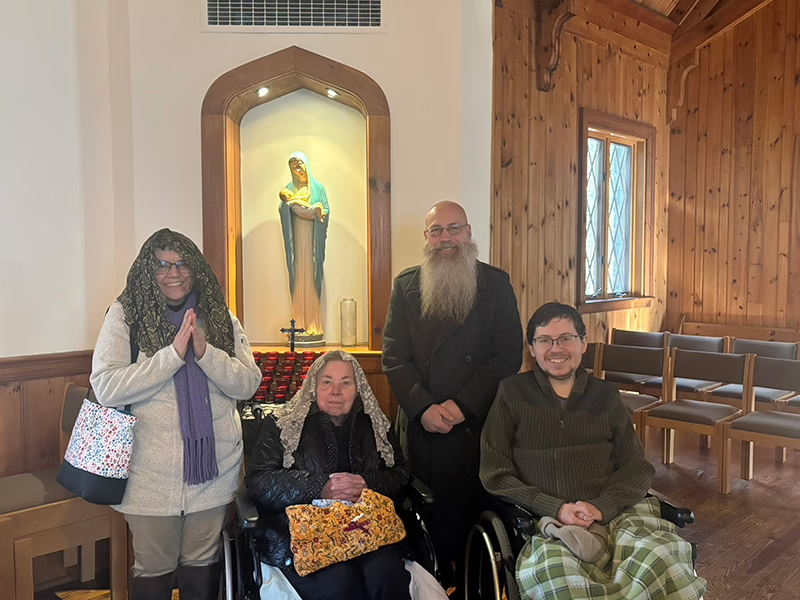
Dawn Isabella has been worshiping there for about four years with her husband Vincent, their adult son Justin, and Vincent’s mother Mary Lou. Mary Lou and Justin are both in wheelchairs – Mary Lou has dementia and Justin has muscular dystrophy. But the family is there every Sunday for Mass, chairs set aside just for them near the statue of the Blessed Mother.
“I look forward to going to Mass,” says Isabella, who is the full-time caregiver for Mary Lou and Justin. The 40 or 50 people who attend Mass there regularly look out for each other and pray for one another, she says, and they enjoy sharing their beautiful mountain church with visitors.
“The community loves each other,” Isabella says, and encountering God at Mass and among her fellow worshipers brings her great consolation.
How well a parish supports people personally and spiritually is a key factor in their ability to nurture their faith and become disciples. Christianity isn’t just about “me and Jesus” – it’s a faith meant to be lived and shared in community, and many times the parish is where that happens.
Parishioners who say their church helps form them as a disciple are twice as likely to say their church helps them grow spiritually as a Catholic, the Catholic Leadership Institute has found over the years through its survey, the Disciple Maker Index (DMI). Nearly 24,000 regular Mass-goers in the Diocese of Charlotte took the DMI earlier this year.
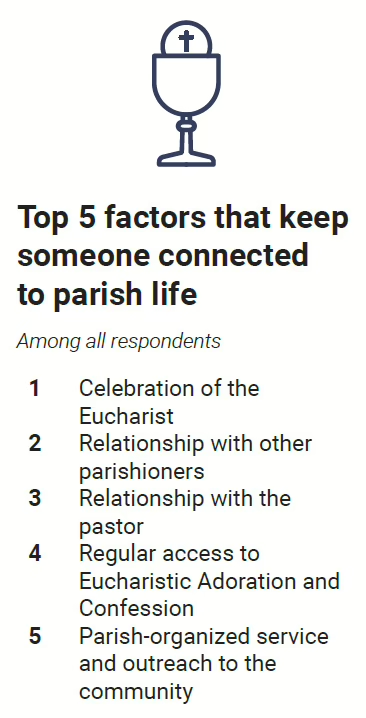
Respondents said besides the Eucharist, relationship with other parishioners is the next biggest factor that keeps them connected to parish life. Yet only 34% of respondents said they “strongly agreed” that their parish provides a community to support them or their family in times of need.
THE POWER OF LISTENING
It all comes down to listening, say leaders of churches that ranked highly on this facet of the DMI.
Before it participated in the DMI, Sacred Heart Parish conducted its own parish-wide survey in 2023, as part of a strategic planning process called for by the diocese, and made key operational changes as a result.
Parishioners said they wanted more frequent access to the sacraments – more Masses, more confession times. “More priestly services meant we needed more priests, and that meant we needed to build a larger rectory,” says Michael Becker, the parish’s operations director.
In 2024, newly ordained Father Matthew Dimock joined Father John Eckert at Sacred Heart, and construction was recently completed on a new, 5,000-square-foot rectory that can accommodate up to five priests on campus.
Besides that, the church is open every day from 6 a.m. to about 9 p.m., and besides Masses, Adoration, innumerable activities and programs, Father Eckert says he and his fellow priests are in the confessional a lot. “Our confessions are like Chick-fil-A – open every day but Sunday,” he jokes.
The parish is also expanding its cemetery, developing more retreats and programs, and planning to build a parish hall for large events and meetings.
More than any one project or program, though, Becker says, parish leaders shifted their thinking to delivering personalized, responsive, high-quality customer service.
Sacred Heart’s staff is now cross-trained to handle a wide range of questions, ensuring most people get the help they need within a day – without being passed from person to person, he says. “We’re a one-stop shop.”
Immediate and individualized customer service done with kindness, Becker says, “should be obvious. People recognize when that’s done well, no matter what their situation is.”
Just like a business, “we are here to serve our customers,” he says, yet their work is more than any business. “This has spiritual ramifications. We’re dealing with people’s salvation.”
SOMETHING FOR EVERYONE
Listening leads to adapting to people’s needs.
“We try to focus on listening to the needs of the people; we like to consult with our parishioners,” says Father José Cardenas-Bonilla of Holy Trinity Mission in Taylorsville. Home to about 100 registered families, the mission is close-knit and largely Hispanic, he says, including both longtime residents and newcomers from neighboring areas where the Hispanic population has grown in recent years.
In October, in response to constant overflow crowds in the 2,400-square-foot church and its small parking lot, Father Cardenas happily added a third Mass to his weekend lineup to accommodate more people more comfortably.
It’s all about being flexible, he says.
Our Lady of Guadalupe Parish in Charlotte also stays flexible. It has to, parish leaders say, because the church building doubles as a meeting space for its 30-plus ministries and as classrooms for its 2,000 faith formation students, when it’s not in use for the eight Masses that routinely draw 6,300 people each weekend.
“Every night there’s something going on, and the parking lot is always full,” says the parish’s Vincentian Father Bruce Krause.
It’s about more than providing space, he says. It’s about feeding people spiritually.
“We have retreats, workshops, Bible studies, rosary groups, Adoration – we try to make it accessible to everybody, and we make it accessible throughout the week, not just on Sundays,” says Vicente Capistrano, the parish’s communications director and youth ministry leader.
The Charismatic Catholic group is one of the parish’s most active ministries, hosting multiple retreats, ongoing Bible studies and small faith-sharing groups that enable people to strengthen their faith together outside of Mass.
“We try to cater to everybody and not to limit them to one day, but to help them fall in love with God and then share that,” Capistrano says.
Once people feel moved spiritually, “they have that joy and they want to continue sharing it.”
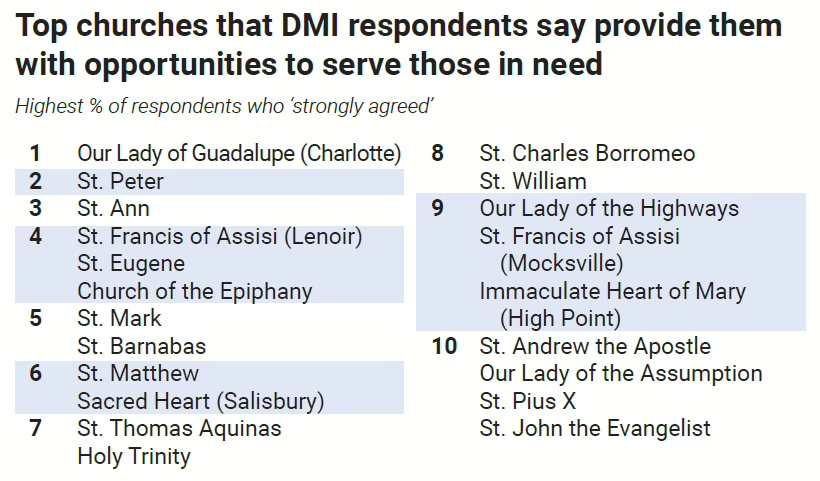
OPPORTUNITIES TO SERVE
“Outreach efforts are one of our strengths,” says Allain Andry, a longtime parishioner and member of the DMI team at St. Peter Parish.
Staffed by Jesuit priests since 1986, the parish in the heart of Uptown Charlotte embodies Ignatian spirituality and offers everyone “an activity, a niche that speaks to them,” Andry says, from small faith groups for young adults, families and seniors, to a wide range of service and advocacy ministries. The parish also tithes 10% of its offertory to local charities.
Recently, an Oct. 25 “Day of Caring” offered parishioners six different hands-on opportunities to serve – from sorting shoes at Samaritan’s Feet or planting trees at a local school to making sandwiches for Roof Above’s emergency shelter.
DMI respondents said they were very likely to recommend St. Peter Parish because they feel spiritually nourished. As an urban parish without the typical neighborhood boundaries, people choose St. Peter’s intentionally – and stay because it enriches their lives.
“Everyone here has picked St. Peter’s for a reason,” Andry says. “If they stay, it’s because they get something out of it.”
— Patricia L. Guilfoyle
Diocesan-wide responses on questions related to how well the parish supports parishioners personally and spiritually.

Survey finds gaps in parish efforts to form disciples
Does your parish equip you to talk about your Catholic faith? Do you feel confident answering questions about Church teachings?
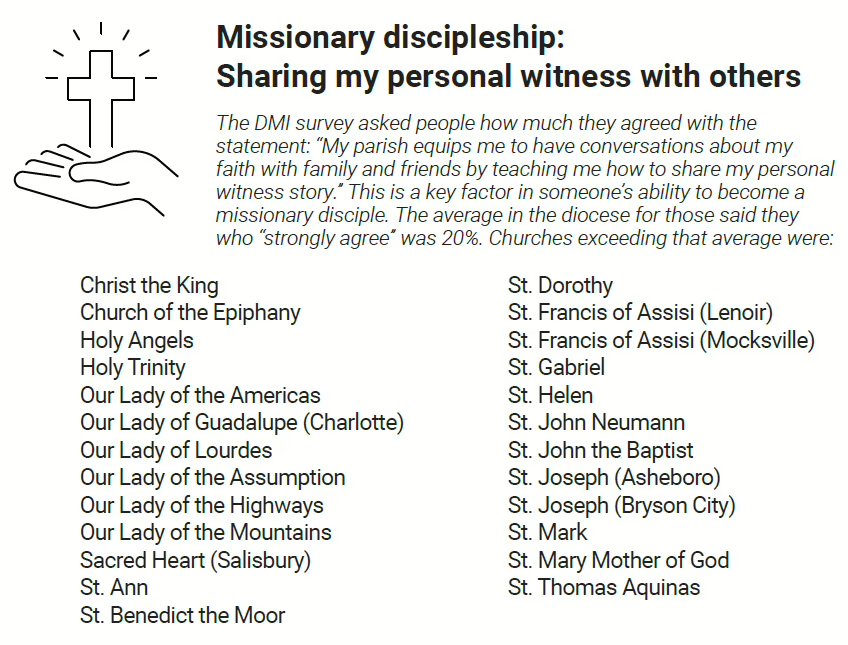
Only a minority of regular Mass-goers who took the Disciple Maker Index (DMI) survey in the Diocese of Charlotte said they strongly agreed that their parish equips them to share their faith (20%) or answer questions about it (35%).
Less than half – 45% – strongly agreed that their parish helps them grow spiritually. And only 33% strongly agreed that their parish forms them as a disciple of Jesus Christ – something that the DMI’s creator, the Catholic Leadership Institute, noted was one of the diocese’s biggest “opportunities for improvement.”
Effective parishes create disciples, and CLI’s research found the biggest predictor of whether parishioners share their faith is that their parish equips them to do so. A person who strongly agrees that their parish equips them to share their witness is twice as likely to share that story more frequently.
Those who frequently answer questions about the faith are also 1.6 times more likely to share their personal witness. “When your people feel confident in their ability to talk about the teachings of the Church, they are more likely to share their personal story,” CLI’s resource guide tells parishes.
Of the 78 parishes and missions that took part in the DMI, 29 scored above the diocesan average of 45% who strongly agreed that their parish helps them grow spiritually. Here are a few examples of what these parishes are doing to strengthen faith formation.
FRESH APPROACHES TO FAITH FORMATION
Like many parishes, Sacred Heart’s faith formation program had revolved around catechists preparing children for the sacraments of initiation, with parents dropping off their kids at the church once a week for classes. Predictably, classes for first Holy Communion and confirmation were full, while participation in other years lagged.
In 2022, the Salisbury parish reorganized its program to put parents in the driver’s seat. Faith in Discipleship and Evangelization, or FIDE, “is family formation, not children formation,” says Peg Fisher, Sacred Heart’s evangelization director.
The 128 families enrolled in FIDE receive home teaching resources, and the entire family attends weekly classes together. Monthly “family nights” let parents connect and get support from Fisher and their pastor Father John Eckert, and others. Families are matched up as prayer partners, attend retreats together, and take part in “sacramental interviews” before first Communion and confirmation.
“The focus is on learning about your faith – it’s a lifelong journey. The sacraments are the beginning, not the end,” Fisher says.
Fisher spends much of her time personally connecting with each family to offer support and answer questions – encouraging them as the primary teachers of the faith to their children, and with the parish there to assist them.
“It’s not easy, but it’s worth it,” she says. The parish has seen the results: children stay more active in the life of the parish, parents themselves learn more about the faith and feel empowered as disciples, and some non-Catholic family members have even joined the Church because of what they encountered through FIDE.
St. Francis of Assisi Parish in Lenoir takes a similar family-focused approach.
Father Alfonso Gamez Jr. spends time with engaged couples “because that’s an investment for the future,” and while children are at their faith formation classes, he teaches their parents: 30 minutes of catechesis in English and 30 minutes in Spanish.
“I try to equip them,” he says. “We talk about parenting styles and how that’s compatible with the faith, challenges that the modern world presents in passing down the faith, and helping them to see themselves as that role model, the first teachers of the faith.”
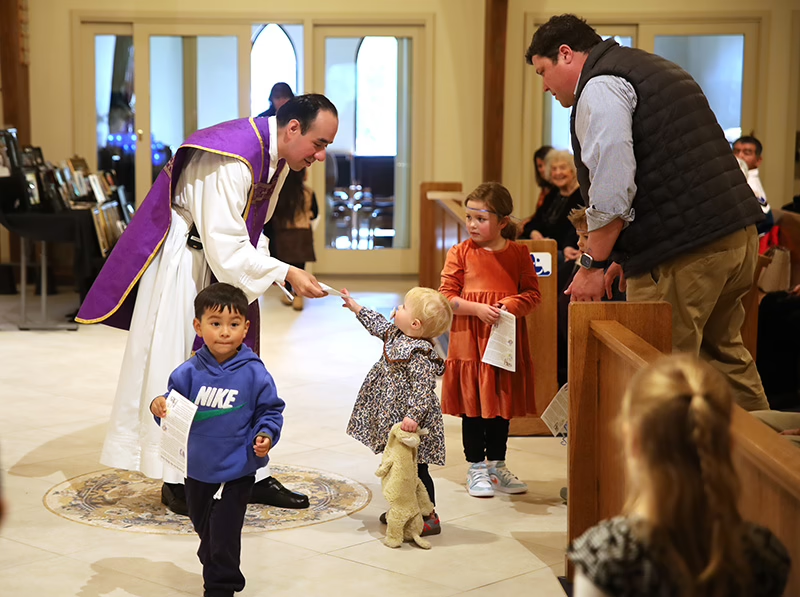
Two popular features at the parish are a Youth Holy Hour held each month and a “Kids Bulletin” handed out at the end of each Sunday Mass.
“We love to see the kids nearly climbing over the pews to come up and get it,” says Kim Clarke, the parish’s evangelization and faith formation director.
SMALL GROUPS ARE KEY
Small groups are central to adult faith formation at Our Lady of Guadalupe Parish in Charlotte. After the parish Charismatic Catholic ministry’s annual retreats, for example, participants form groups of six or seven that meet weekly for three years to study Scripture and discuss how to practice their faith in their day-to-day lives.
“It’s one of the biggest ministries that we have, if not the biggest,” says Vicente Capistrano, the parish’s communications director and youth ministry leader.
After reviewing their DMI survey data, Vincentian Father Bruce Krause says, the parish plans to expand their small group offerings to better support parents in teaching the faith to their children. If the parish is there to strengthen and encourage them, he says, parents can “fulfill their important role in the formation of their children.”
RECOGNIZING GOD’S PRESENCE
Recognizing how God is working in one’s life is a primary driver of effective discipleship, and it’s a key aspect of Ignatian spirituality and a focus of ministry at the Jesuit-run St. Peter Parish in Charlotte. St. Ignatius, founder of the Jesuit order, sought to find God in all things and all people.
The parish’s Ignatian Spirituality program offers spiritual direction, retreats and activities throughout the year. Programs, especially the Spiritual Exercises, fill up fast. Participants meet in groups in person and online, as well as individually with a spiritual director.
Jesuit Father Tim Stephens, pastor, says a Christian disciple is always growing in faith. That’s why, in addition to Mass and the sacraments, the parish offers resources to help people deepen their relationship with God and answer His call to serve others.
“This is ultimately what going to Mass is about in the first place: we go to Mass to be sent out to be a better and more effective disciple of Jesus,” he says.
— Patricia L. Guilfoyle
Diocesan-wide responses on questions related to how well the parish supports parishioners personally and spiritually.

Survey highlights need for confidence in faith sharing
Missionary discipleship is the call to evangelize, in words and in actions, responding to Jesus’ command to “go and make disciples of all nations” (Matthew 28:19-20).
Results of the Diocese of Charlotte’s Disciple Maker Index (DMI), conducted last spring by the non-profit Catholic Leadership Institute (CLI), showed that most respondents report having strong personal faith but little confidence in sharing that faith with others.
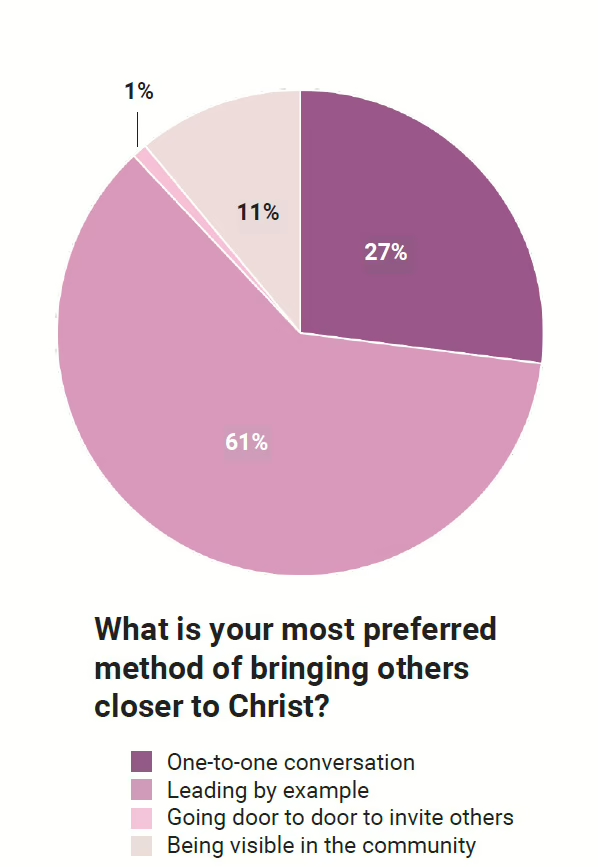
One-on-one conversations are the most effective way to draw others closer to Christ, CLI’s years of national research indicate, yet many respondents in the diocese’s DMI survey – most of whom said they are regular Mass-goers and longtime members of their parish – acknowledged that they rarely engage in direct faith sharing.
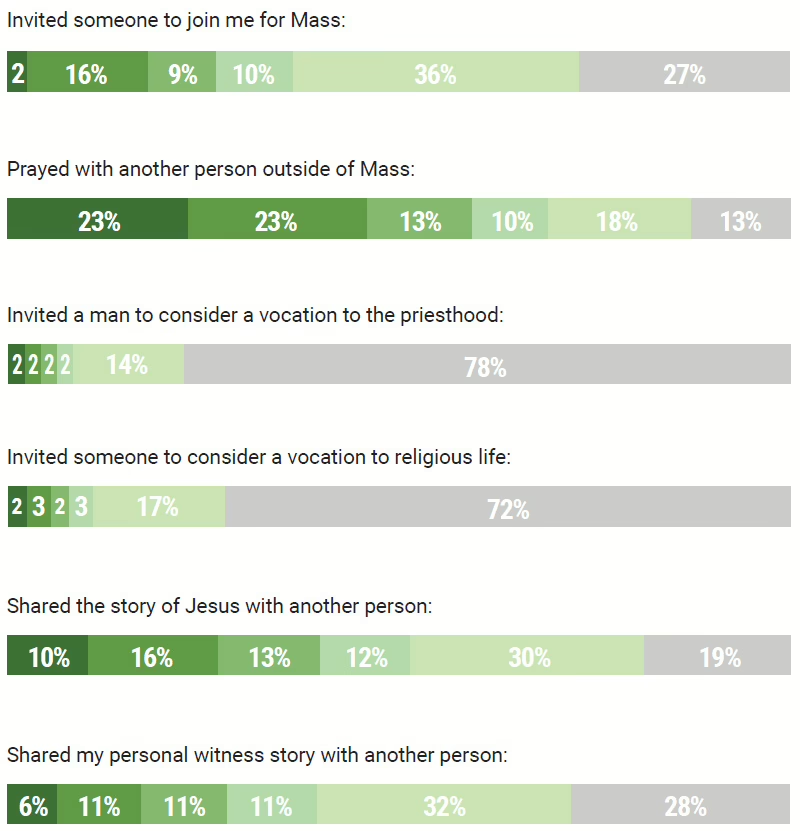
Overall, 60% said they rarely or never shared their own faith story, and 49% said they rarely or never talked with others about Jesus. In addition, 27% of people said they have never invited someone to Mass, and 29% have never invited someone to a parish activity or event.
The DMI also identified a significant lack of promoting vocations. More than three-quarters of respondents (78%) said they have never encouraged someone to consider the priesthood, and 72% said they have never spoken with someone about discerning a vocation to consecrated religious life.
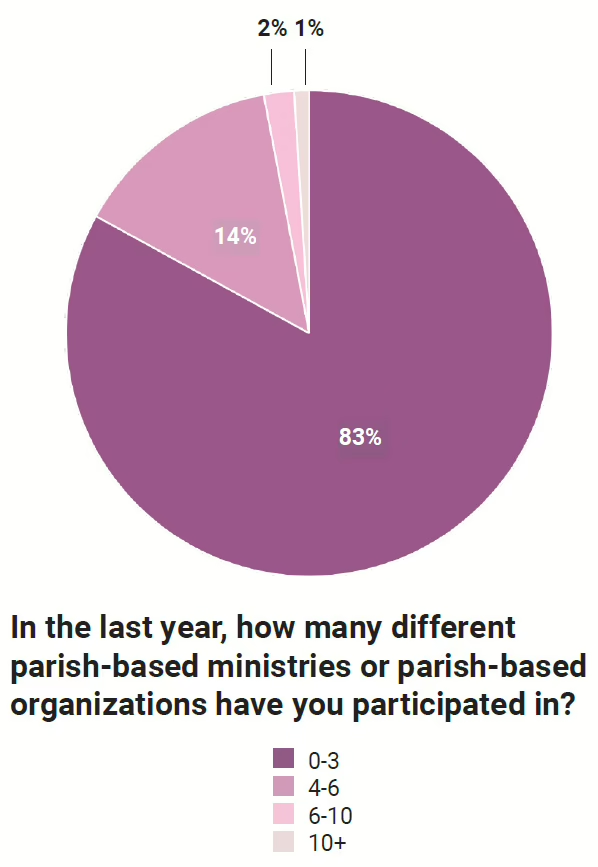
The DMI survey also found that 83% participated in three or fewer parish groups in the past year, pointing to limited involvement beyond Sunday Mass.
According to CLI’s research, a key factor in whether parishioners become missionary disciples is if their parish equips them to do so. A person who strongly agrees that their parish equips them to share their witness is twice as likely to have a high frequency of sharing that story. Furthermore, people who feel confident in their ability to answer questions about Church teaching are also more likely to share their personal story with others, CLI data show. Additionally, parishioners who feel comfortable inviting another person to attend Mass are 1.3 times more likely to indicate a higher frequency of talking about their faith with others.
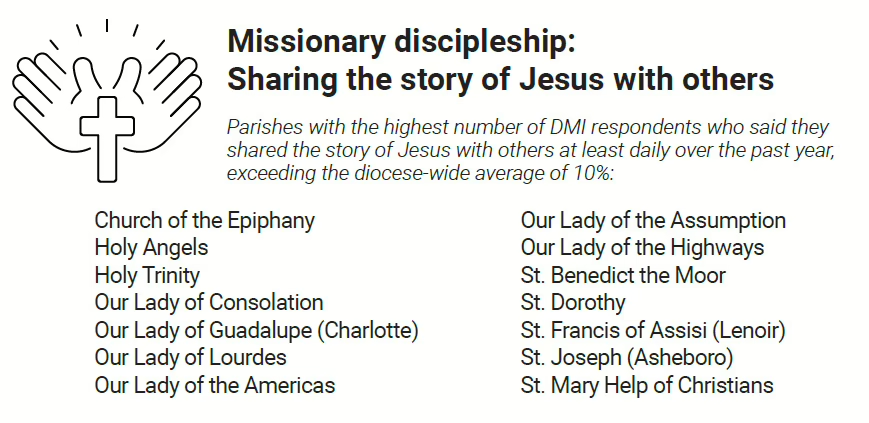
These connections make sense to Father Alfonso Gamez Jr. at St. Francis of Assisi Parish in Lenoir. His parish ranked above the diocese-wide average for the percentages of respondents who said they frequently share their personal witness and who said they talk about Jesus with others.
“The desire to evangelize is a fruit of one’s faith,” Father Gamez says. “If I give people intentional substance and feed them well, I expect and I have faith that that will instinctively give them the desire to want to evangelize. If you truly love something, you don’t want to keep it bottled up.”
Evangelization is a priority for the Lenoir parish. Father Gamez and his leadership team are developing a six-year pastoral plan that includes more ways to equip and inspire parishioners – especially through small faith-sharing groups and apostolates that can create “pockets of fellowship.”
The idea, Father Gamez says, is to help parishioners form relationships outside of Mass, with “organic opportunities to grow in friendship and be able to support each other.”
“Because at the end of the day,” he says, “that is what a church is.”
“It should be the case that there’s always an opportunity for a parishioner to be able to find some sub-community within the community, to be able to feel connected to the whole and not fall through the cracks,” he says.
“I think for me, you can’t give what you don’t have,” he explains. “So, our goal as a parish is to feed our parishioners, and then from that abundance they will then give of themselves and evangelize and become missionary disciples.”
LOOKING AHEAD
The diocese’s DMI results reveal a local Church with deep faith, yet clear opportunities for improvement – especially to help Catholics grow confident in sharing their faith and becoming missionary disciples of Jesus Christ.
Bishop Michael Martin, OFM Conv., is reviewing the diocese-wide DMI findings alongside other research, feedback from clergy and diocesan leaders, and the listening sessions from the local Synod. The information will shape a strategic vision for the diocese’s future – one focused on forming and equipping disciples who will go out and share the Good News in our rapidly growing communities.
— Patricia L. Guilfoyle
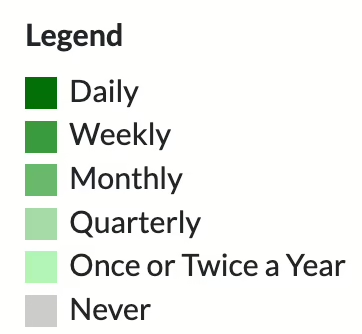
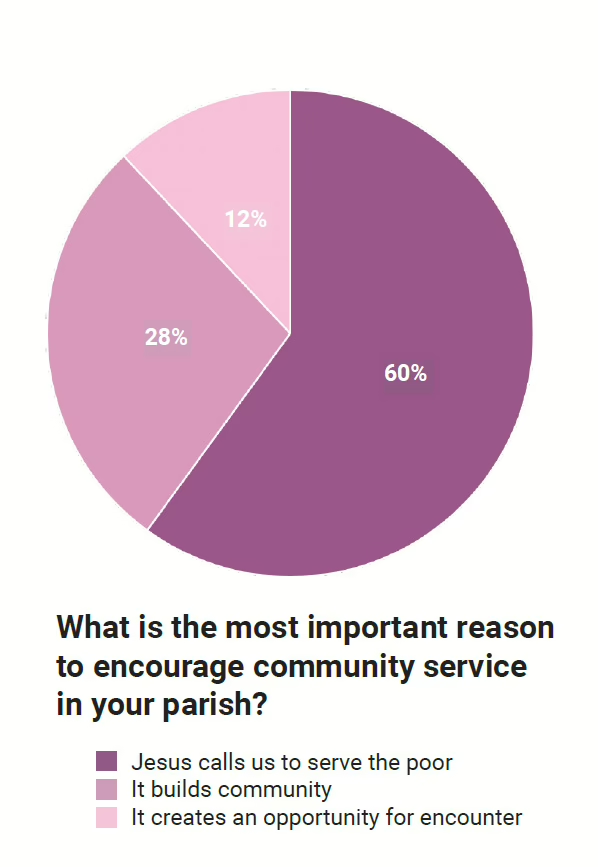
Diocese-wide responses on questions related to respondents’ missionary discipleship practices: